
How to Plan a Landscape That Works for Entertaining

Do you love entertaining, but don’t have a dedicated outdoor space for hosting? A landscape design for entertaining should do more than look impressive. It should make it easy for people to arrive, move around, sit comfortably, share a meal, and enjoy time together. The best outdoor spaces feel natural to use because the layout, materials, planting, lighting, and details all support the way people gather.
At Jovak Landscape and Design, we help homeowners transform properties to their maximum potential through exceptional craftsmanship and a clear design-build process. Whether you host large family gatherings, casual dinners, or quiet evenings with a few friends, thoughtful planning can make your landscape more comfortable, useful, and connected to your home.
Start with how you entertain
Before choosing a patio material or outdoor feature, consider what entertaining means for your household. Do you usually host relaxed barbecues, formal dinners, children’s birthday parties, or larger seasonal gatherings? Do guests spend most of their time near the kitchen, around a fire, beside a pool, or spread across several areas of the property?
Make a list of the activities your landscape needs to support. Common priorities include:
-
Outdoor dining
-
Comfortable lounge seating
-
An outdoor kitchen or serving area
-
Space for children and pets
-
A fire feature or gathering area
-
Privacy from neighbours
-
Easy access to the home
-
Lighting for evening use
This list gives the design a purpose. It also helps separate essential features from additions that may be considered in a future phase.
Create connected outdoor rooms
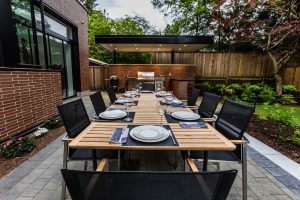
A successful entertaining landscape usually includes several outdoor rooms rather than one large, undefined space. A dining terrace may sit closest to the kitchen, while a lounge area can be positioned farther away for quieter conversations. Planting, material changes, low walls, steps, or a shift in grade can define each area while keeping the overall property connected.
The goal is to create a clear relationship between spaces. Guests should understand where to sit, where food is served, and how to move between the home, patio, lawn, garden, and other destinations without feeling directed through a series of obstacles.
Plan circulation before adding features
Good circulation is one of the most important parts of landscape design for entertaining. Consider the path guests will take from the front or side of the property to the main gathering area. Think about how food, drinks, furniture, and serving items will move from the home to the outdoor spaces.
Walkways should be comfortable and appropriately sized for the number of people using them. Changes in elevation need safe steps, landings, railings, or other transitions where required. A well-planned layout also avoids placing furniture, planting, or decorative features in the natural path of movement.
Position dining and cooking areas thoughtfully
Outdoor dining works best when it is convenient to the home and connected to food preparation. An outdoor kitchen, grill, bar, or serving counter should have enough space for preparation and circulation, not just room for the equipment itself.
Consider prevailing wind, afternoon sun, views, privacy, lighting, and the location of utilities. It may also be helpful to place a lounge area nearby so the person preparing food remains part of the conversation.
The right layout depends on the property and the way your household uses it. A site review during the design process can identify access, grading, drainage, and service considerations before construction begins.
Design for comfort in every season
People stay longer when an outdoor space feels comfortable. Shade structures, covered areas, umbrellas, planting, wind protection, outdoor heating, and comfortable furniture can extend the usefulness of the landscape throughout the year.
Sun and shade change during the day and across the seasons, so the most comfortable location for dining may not be the same as the best location for a lounge. A thoughtful plan studies these conditions instead of treating comfort as an afterthought.
Choose materials that support regular use
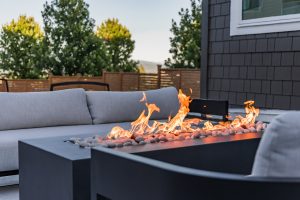
Entertaining puts extra demands on patios, steps, walkways, walls, and planting areas. Materials should complement the home, withstand local weather, and suit the level of maintenance you want to take on.
A cohesive palette of stone, pavers, concrete, wood, planting, and lighting can make separate outdoor rooms feel like part of one landscape. It is also important to think about cleanability, drainage, slip resistance, furniture placement, and how materials will look after years of use.
Build lighting into the plan
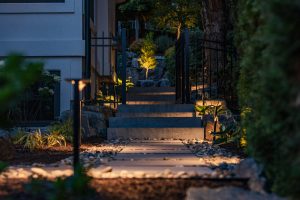
Landscape lighting helps guests move safely and makes the outdoor space more enjoyable after sunset. Path lighting, step lighting, accent lighting, task lighting near cooking areas, and softer lighting around seating can each serve a different purpose.
Lighting should be planned with the layout, not added randomly at the end. The goal is to create visibility and atmosphere without excessive glare or light spilling into neighbouring properties.
Include privacy without closing in the space
Privacy can make an entertaining area feel more comfortable, especially in established neighbourhoods or properties with close sight-lines. Planting, fences, screens, walls, trellises, and changes in grade can all help create separation.
The best privacy solutions usually combine several elements. A layered planting plan may soften a fence, while a screen or small tree can block a specific view. This creates a more natural result than relying on one solid barrier everywhere.
Account for drainage, grading, and access
Entertaining areas need to perform as well as they look. Proper grading and drainage help protect the home, patio, walls, planting, and furniture from standing water and runoff. On a sloped property, retaining walls, steps, terraces, and drainage systems may be essential parts of the design.
Construction access also matters. Materials and equipment need a practical route to the work area, and the design should account for how the project will be built. Considering these details early helps reduce surprises and supports a more durable finished landscape.
Align the design with your budget and timeline
A clear budget conversation helps determine which entertaining features should be included first and which could be added later. It also helps the design team focus investment on the spaces and details that will have the greatest effect on how you use the property.
At Jovak, our process brings discovery, design, budget alignment, approval, estimating, construction, and handoff into a clear path. This allows homeowners to make decisions with better information before construction begins and helps carry the intent of the design into the finished landscape.
Timing is important as well. Major projects may involve design development, permits, approvals, material lead times, site preparation, and construction scheduling. Starting the conversation early gives the project more room to develop properly.
Design the experience, not just the features
The most successful entertaining landscapes are not defined by the number of features they include. They are defined by how naturally people use them. A connected layout, comfortable seating, convenient food preparation, durable materials, effective lighting, and thoughtful privacy can turn a backyard into a place people want to return to.
Jovak Landscape and Design helps homeowners in Chilliwack, the Fraser Valley, and the surrounding Lower Mainland create outdoor spaces that improve everyday life. If you are planning a landscape for entertaining, begin with a conversation about how you gather, what your property needs, and the experience you want to create.